Can Micro-Drones Replace Bees by 2030?

Introduction
Greenhouse pollination faces real limits as confined conditions reduce bee effectiveness, pushing growers toward alternatives such as drone pollination and other robotic pollinators. Recent studies highlight rapid progress in Micro-Drones equipped with soft robotic arms and AI flower recognition, offering targeted and reliable greenhouse pollination where natural pollinators struggle.
Greenhouse Pollination Limits and Bee Populations
Greenhouse crops commonly rely on managed bumblebees or honeybees for pollination, but bee use in protected environments faces specific limits: altered light spectra, pathogens, inbreeding and colony declines linked to commercial rearing, and restricted foraging space that reduces pollinator effectiveness. Multiple reviews and field studies report that greenhouse conditions (supplemental lighting, confinement, disease transfer) can cause bumblebee colony decline and make consistent service delivery difficult for growers.
Growers therefore have long-used manual or mechanical alternatives (vibrators, hand pollination) and—increasingly—experimental drone pollination systems and automated devices to secure yield where natural pollinators are unreliable. Reviews of artificial pollination list drone-based and robot-based approaches as promising supplements or substitutes in controlled environments.

Micro-Drones, Soft Robotic Arms & AI Flower Recognition: Evidence and Challenges
The micro-drone concept and existing prototypes
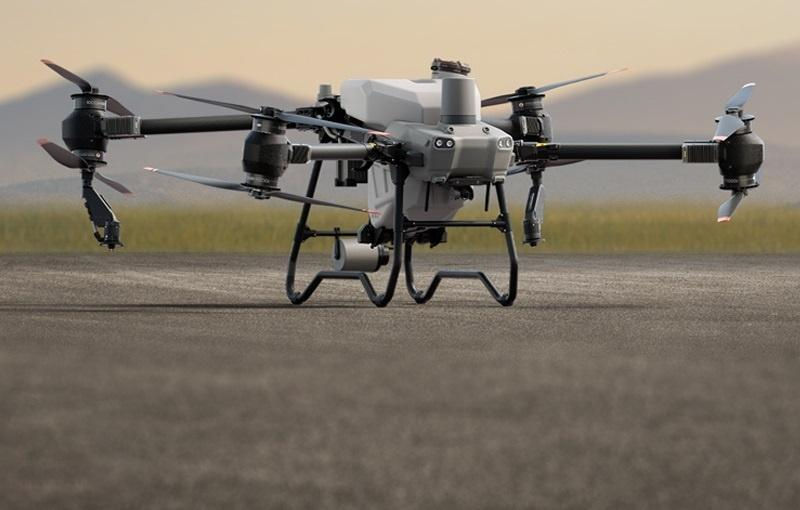
Academic groups and startups are developing micro-drones specifically for controlled-environment agriculture (CEA). Polybee (a spin-off from the National University of Singapore) and several university teams have demonstrated small autonomous flying platforms intended for greenhouse pollination and for targeted visits to flowers. Field and demo reports show micro-UAVs that can carry pollen, contact flowers, or vibrate blossoms for pollen release.
Soft robotic end-effectors for precise flower contact
Laboratory work and review articles describe pollination mechanisms that go beyond simple pollen spraying: soft robotic arms, compliant brushes or ionic-gel coated fibers have been trialed to touch or vibrate individual flowers with low damage risk. These soft end-effectors are proposed because they reduce mechanical damage compared with rigid tools and can mimic the gentle contact bees provide. Reviews catalog such mechanisms as key areas of innovation in robotic pollination.
AI-based flower recognition and visual servoing
Accurate, fast flower detection and classification is a major technical requirement for autonomous pollinators. Recent research uses deep learning and visual-servo control to detect tomato and other crop flowers, classify flower stage, and guide robots or drones to the correct position for pollination. Studies report success in supervised testbeds (tomato, pear, durian experiments) but note that robustness across lighting, occlusion, and high plant density remains an active research challenge.
Performance, scale and practical constraints
Comprehensive reviews and field trials emphasize several practical constraints before micro-drones could replace bees wholesale: energy and flight endurance for tiny flying robots, pollen collection/transfer efficiency compared with insects, safe navigation in dense canopy, disease/spore transfer concerns, and the economic cost of deploying and maintaining swarms at scale. Systematic reviews conclude that progress is rapid but that full autonomy, reliability and cost-effectiveness in real commercial greenhouses have not yet been demonstrated broadly.

Benefits vs Natural Pollinators (what the literature reports)
Predictability & scheduling: Artificial systems can be scheduled and targeted to flowers or crop rows, offering more control than free-foraging bees. Reviews note this as an advantage for high-value greenhouse operations.
Disease & biosecurity tradeoffs: While managed bumblebees can introduce or amplify pathogens across greenhouses (a documented problem), artificial pollinators remove biological vectors but introduce new biosecurity considerations (pollen handling, cross-contamination via equipment). Literature suggests tradeoffs rather than a simple win.
Precision & multimodal sensing: Robotic pollinators with AI can potentially pollinate only receptive flowers, avoid over-pollination, and integrate with other sensing tasks (flower counts, crop monitoring). Papers demonstrate combined sensing/pollination prototypes but also note robustness gaps under production conditions.
Unique Angle — “Can Micro-Drones Replace Bees in Greenhouse Agriculture by 2030?”
The peer-reviewed literature and recent technical reporting give a cautious, evidence-based answer: micro-drones are likely to supplement and, in niche cases, partially replace managed bees in greenhouses by 2030, but a full, widespread replacement is unlikely without major advances and demonstrated cost reductions. Several recent reviews and experiments document strong progress (AI flower recognition, prototype micro-UAVs, soft end-effectors), yet they also document remaining gaps in endurance, autonomy, pollen transfer efficiency, and large-scale deployment. In short: promising partial adoption is supported by the literature; universal replacement by 2030 is not yet supported by the peer-reviewed record.
What the literature recommends next (evidence-based steps)
Robust field trials in commercial greenhouses to compare fruit set and economic returns between bee services and drone/robotic systems. Reviews repeatedly call for standardized, large-scale trials.
Interdisciplinary work on soft end-effectors and flight endurance so micro-drones can interact safely with delicate flowers while sustaining practical work times. Multiple reviews highlight soft robotics and power solutions as priorities.
Integrated AI pipelines for flower detection across crop types and light conditions, validated in commercial settings rather than lab benches. Recent AI papers emphasize robustness and dataset diversity as critical.
Conclusion
Current evidence suggests that Micro-Drones and other robotic pollinators can supplement bees and improve drone pollination performance in controlled environments. Although full replacement by 2030 is uncertain, advancements in AI, soft robotics and autonomous systems show strong potential to strengthen greenhouse pollination where traditional methods fall short.
Sources and further reading
(links below are the sources used to compile the article; statements in the text are taken directly from these peer-reviewed articles, technical reviews, university reports and industry coverage.)
Goulson, D. Decline and conservation of bumble bees. PubMed (2008). PubMed
“Robotic Pollination in Greenhouse Farming: Current Innovations, Challenges and Future Prospects.” Orient Journal of Chemistry / ResearchGate (2025). orientjchem.org+1
Polybee — “There’s a new drone in greenhouses, and it isn’t a bumblebee.” HortiDaily (2021). hortidaily.com
MIT News — “This fast and agile robotic insect could someday aid mechanical pollination” (15 Jan 2025). MIT News
ScienceDirect / Autonomous flower pollination review (Q. Zhang, 2025). sciencedirect.com
MDPI — Artificial Pollination Technologies: A Review (2023). MDPI
Cambridge / Robust pollination for tomato farming using deep learning and visual servoing (2025). Cambridge University Press & Assessment
Hort Innovation / Horticulture Australia — “Micro-drones could help solve Australia’s glasshouse pollination problem” (2022). horticulture.com.au
Research articles on flower mapping and AI datasets (PLOS, Nature datasets, Frontiers) for flower detection and AI methods. PLOS+2Nature+2
Reviews and arXiv preprints summarizing robot-based pollinators and bibliometric trends (2024–2025). arXiv+1


Comments